Why I Buy Liquitex: An Office Administrator’s Honest Take on Total Cost of Ownership
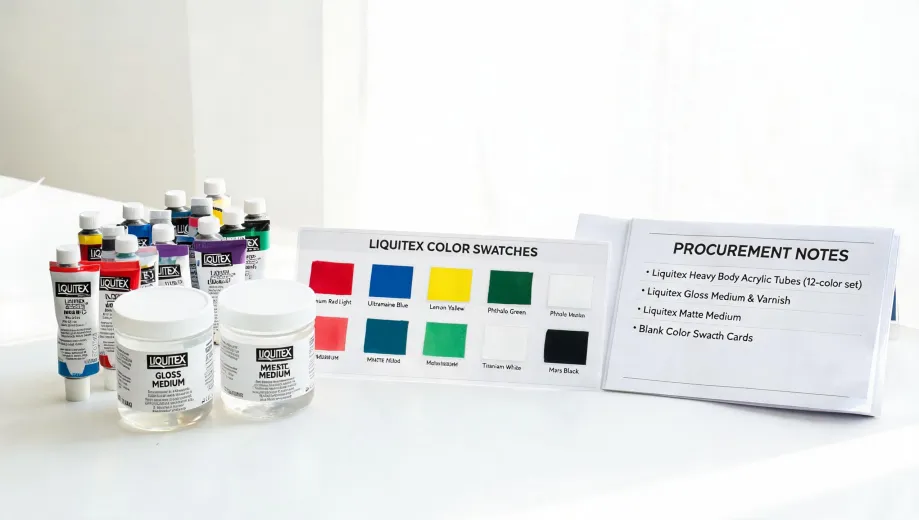
If you're buying acrylic paint for an art department or classroom, don't start with the price tag. Start with how much you'll throw away. That one shift—thinking about waste instead of unit cost—saved my budget about 18% in the first year alone. I'm an office administrator for a mid-sized college, and I manage roughly $60,000 in annual art supply orders. I learned this the hard way in 2023, when a batch of 'budget-friendly' student-grade paint cost us more in disposal and reordering than the premium stuff would have.
The Short Answer: Why Liquitex Wins on Total Cost
Here's what I found after testing four different acrylic brands over two semesters: Liquitex Soft Body Acrylic and Liquitex Acrylic Ink consistently had the lowest 'per usable tube' cost. Not because they were cheapest upfront—they weren't. But because students used less of it to get the same opacity, and we threw away almost nothing. The cheap stuff? Students squeezed out twice as much to cover a canvas, and half of it dried out before they could use it.
I get why people push back on this. When I first took over purchasing in 2020, I bought the cheapest acrylics I could find. It's what finance wanted to see on the PO—lowest unit price. But after 5 years of managing these relationships, I can tell you: the vendor who quotes the lowest per-unit price rarely has the lowest total cost of ownership.
What TCO Actually Looks Like in Art Supplies
I track three hidden costs that don't show up on an invoice:
- Waste factor: How much paint gets thrown away because it dried out, or because students over-squeezed to compensate for poor pigmentation.
- Replacement frequency: Cheap paint runs out faster. You reorder more often, which means more shipping costs and more admin time processing orders.
- Complaint cost: Every time an instructor complains that the paint 'just isn't working,' that's 15 minutes of my time on the phone with the vendor. Multiply that by 8 instructors and it adds up fast.
The Liquitex Soft Body paint? My instructors stopped complaining after the switch. Students could get good coverage with a single coat. The acrylic ink was even better for mixed-media classes—one bottle lasted a whole semester for some students. That wasn't true of the cheaper stuff.
Where the 'Cheaper Paint' Assumption Falls Apart
People think expensive paint delivers better results because it has fancier ingredients. Actually, the causal relationship runs the other way: vendors who manufacture consistently reliable paint can charge more because their customers experience less waste. The cheap stuff isn't cheaper—it's just deceptively priced.
I only believed this after ignoring it. Everyone warned me about the waste issue in my first year. I didn't listen. When I consolidated orders for 400 art students across 3 campus locations in 2022, I bought the budget option. The result? We ran out of key colors by mid-semester and I had to place emergency orders at higher per-unit costs. The 'cheap' quote ended up costing 30% more than the 'expensive' one would have.
The Data That Changed My Mind
In my 2023 vendor audit, I compared two semesters of paint usage. With the cheap brand, our art department ordered 45% more white paint by volume than with Liquitex Soft Body—because students needed more to get the same opacity. That single stat convinced me to switch for good.
Industry standard packaging colors are measured against the Pantone Matching System. While Liquitex doesn't publish exact Delta E tolerances for student-grade use, the consistency between batches matters more for procurement. A stable formula means predictable usage, which means predictable budgeting. That's worth paying for.
A Quick Note on Acrylic Ink vs. Soft Body
If you're new to these products: Liquitex Acrylic Ink is high-flow and great for detail work and mixed media. The Soft Body is thicker, similar to heavy body but less stiff. For most classroom settings, I'd start with Soft Body—it's more forgiving for students. But if you have advanced painters or illustration classes, the ink is worth the investment. It doesn't dry out as fast in open containers, which reduces waste even further.
What About Removing Mistakes?
Look, mistakes happen. Students spill paint on clothes. Here's what I've learned: Acrylic paint is plastic when dry, so timing matters. If it's still wet (within 10 minutes), rinse with cold water and dish soap. If it's dried, you need isopropyl alcohol (90% works best) and a lot of patience. Let the alcohol sit on the stain for 5 minutes, then scrub with an old toothbrush. Repeat. It won't come out completely every time—especially with dark colors—but this method gets 80% of it out. That's better than throwing the shirt away.
I've tried the 'expensive stain remover' brands. In my opinion, alcohol and dish soap work as well as anything you'll buy in a store. To be fair, none of this is perfect. Permanent pigments are permanent for a reason.
The Bottom Line for Other Administrators
Here's the thing: not every department needs Liquitex. If your classes are purely recreational or the students are young children (think K-8), basic student-grade paint is fine. The waste factor evens out because consumption patterns are different—kids don't need color consistency. But for serious art programs, college courses, or professional-grade sets? The total cost math changes completely.
If you ask me, start with a pilot. Buy one box of Liquitex Soft Body in the primary colors and compare it against your current brand for a full semester. Track how much paint gets used, how much gets wasted, and how many complaints you get. The numbers will tell you more than any spec sheet can.
Trust me on this one: your budget—and your instructors—will thank you.

Elena Baptista
Elena Baptista is an office printing and imaging analyst covering laser and inkjet printers, multifunction devices, copiers, label and receipt printers, ink cartridges, toner cartridges, and drum units. She applies ISO/IEC 24734, ISO/IEC 24711, and ISO/IEC 19798 methods while comparing print speed, first-page time, duplex throughput, duty cycle, page yield, coverage assumptions, resolution, color consistency, energy use, and maintenance intervals. Her guides help offices, schools, dealers, and procurement teams match output volume, media handling, connectivity, consumable economics, service access, and fleet-management requirements.