The $740 Mistake That Changed How We Buy Art Supplies
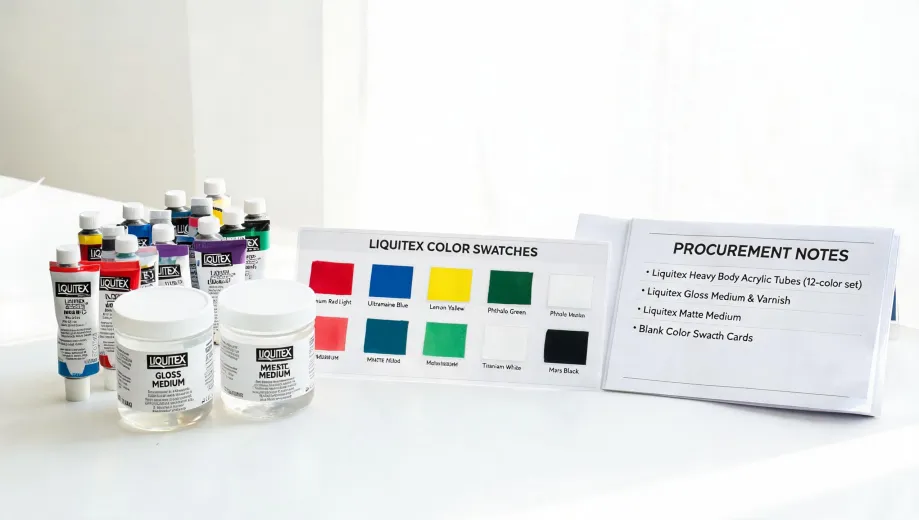
So there I was, in September 2024, staring at an invoice for a rush order of Liquitex materials that should’ve been a routine purchase back in July. The total was $740. The July quote I’d been too busy to approve was $290. That difference—$450 of self-inflicted panic—is why I now think differently about every supply order I place.
I manage procurement for a community art school: about 320 students a semester, 14 instructors, four people on the admin team. My job is to turn a roughly $60,000 annual budget into paint, brushes, paper, canvas, gesso, and the occasional box of markers—without getting an earful from the studio staff. Most days, I’m fine with that. Some days, I’m the one staring at a calculator screen, wondering where the month went.
We use Liquitex as our main acrylic line. That was true before I started and it’s still true. The brand has been making acrylics since 1955, and the consistency of the pigments is something the instructors have learned to trust. But in early 2024, I had what I thought was a clever idea: if we swapped the Liquitex heavy body and soft body paints for a cheaper generic brand, we’d save around 18% on the paint line. In a spreadsheet, that looked like smart management. In a classroom, it looked like a disaster.
When Cheap Paint Stopped Being Cheap
In January 2024, I switched our spring order to a budget acrylic line. Dana—our painting instructor, twenty years in the classroom—warned me not to. Not in a dramatic way. She simply said, “I’ve seen how that paint behaves with students. It’s not the same.” But I had numbers on my side. Or so I thought. The budget brand cost 18% less per ounce, and after an unexpected HVAC repair, we needed every dollar we could free up.
The trouble showed up in the second week of classes. Beginners were getting frustrated because their colors looked weak and muddy no matter how much they mixed. I did my own side-by-side test after that: same canvas, same brush, same color, two paints. One was our old Liquitex soft body acrylic paint. The other was the budget tube. The difference wasn’t subtle. The Liquitex laid down a smooth, even film in one pass. The budget paint dragged, looked patchy, and took three or four coats to reach anywhere near the same opacity. In dollar terms, students were using roughly two and a half times as much cheap paint to get the same result. My 18% “savings” vanished.
By March, instructors were quietly buying their own supplies to keep classes running. I found out when one of them submitted a reimbursement request for a “classroom workshop supply” that was actually a set of proper acrylics she’d bought out of pocket. That was the moment I realized my clever procurement idea had created a black market for art paint inside our own building.
The Permanent Marker Emergency That Wasn’t About Paint
Here’s the part of the story I didn’t expect.
In April, a kids’ instructor messaged me in a panic. One of the nine-year-olds had used a permanent marker on his forearm, thinking it was washable. Soap and water didn’t move it. Baby wipes didn’t either. The student was minutes away from tears because his mom was coming, and he was sure he was going to be lectured about ruining his skin.
I remembered reading that hand sanitizer can break down permanent ink. We had a pump bottle at the front desk, so I squirted some on his arm and had him rub. Within ten seconds the marker started lifting. A second squirt, a paper towel, and his arm was close to clean.
That’s how I learned how to remove permanent marker from skin without dragging acetone into a kids’ studio: use an alcohol-based gel (hand sanitizer works), rub gently, and repeat. For stubborn stains, a little oil first helps loosen the ink. It’s not a chemistry breakthrough, but it’s practical classroom knowledge that belongs on every studio supply list.
Which made me realize something bigger. We had stocked quality paint, good brushes, and a dozen other “important” supplies. But we hadn’t stocked the small practical responses—the things that stop a small classroom incident from turning into a bad afternoon. Hand sanitizer, for example, costs almost nothing. Knowing what it can do is priceless.
The Blox Fruits Calculator Moment
A few weeks later, our tech coordinator’s son came to the office after school. He was maybe eleven, and he was playing Roblox on his tablet. He looked up and said, “You know about Blox Fruits? There’s a whole Blox Fruits calculator thing. You put in your level and your fruit, and it tells you exactly how many stat points to spend.”
I almost laughed because it sounded like a sentence generated by a random internet meme. But he showed me the screen. He wasn’t guessing. He was making decisions based on a tool that calculated the expected result before he spent any in-game currency.
I looked at my own procurement process and realized I was doing the opposite. Every ordering cycle, I sat down with last year’s invoice and guessed. I didn’t calculate cost per student per class hour. I didn’t compare “cheaper” products against the true cost of replacements, reprints, or wasted class time. A kid playing a video game had a better decision-making system for fake money than I had for a real annual budget.
So I built my own version. The spreadsheet is straightforward. It tracks every purchase we make, then divides it by how many students actually use the product and how many hours it lasts. It gives me a real cost per class hour, which is not the same as the price on the invoice.
That spreadsheet changed two decisions almost immediately. The first: we stopped buying the cheapest 20 lb copy paper for handouts. On paper, the price per ream looked “smart.” In practice, it jammed the printer constantly, wasted reams through misfeeds, and made the admin team lose their rhythm every single week. We switched to a mid-range 24 lb copy paper, and the jams basically stopped. The extra cost was tiny. The time saved was real.
The second: we standardized the adult beginner painting classes on the Liquitex heavy body acrylic pro starter set. It’s a classroom-friendly format—a solid range of colors in small tubes, no need to guess which individual tubes to buy, and no half-used tubes rotting in a storage bin. For beginners, it puts the right material in their hands without overwhelming them. And because the pigment is consistent, instructors can teach color mixing without fighting the paint.
What I’d Tell Another Procurement Person
If you’re responsible for buying supplies for a school, a studio, or any organization where people make things, here are the lessons I keep coming back to.
First, price per unit is a trap. The budget paint cost 18% less per ounce but roughly two and a half times more per successfully painted canvas. The cheap copy paper saved cents per ream but cost dollars in staff time. Total cost is the only number that matters.
Second, buy the thing that touches the work. For us, that means the Liquitex line. Liquitex soft body acrylic paint is the classroom workhorse—it mixes cleanly, flows well, and doesn’t punish a student who’s still learning how much water to add. Heavy body is what the more experienced painters prefer. Buying a trusted, consistent product isn’t a luxury; it’s an instructional tool. Skimping on it teaches students that painting is frustrating and muddy, and that’s the exact opposite of what an art school should do.
Third, build your own calculator—whatever form it takes. It doesn’t have to be a Blox Fruits calculator for art supplies. It just has to force you to look at the relationship between what you buy and what the classroom actually needs. Once I started tracking cost per student per class hour, I stopped making decisions based on ballpark “savings” and started making them based on numbers.
Fourth, put the odd supplies on the list. Hand sanitizer, paper towels, baby wipes, rubbing alcohol—these aren’t glamorous line items, but they solve real problems. If you run a kid-friendly program, the day will come when you need to remove permanent marker from skin, and you’ll be grateful for the cheap bottle on the shelf. (Note to self: add hand sanitizer refills to the February purchase calendar.)
Fifth, don’t let a budget shortfall turn your studio into an experiment. There are places where cutting corners makes sense. Paint pigment isn’t one of them. Neither is printer paper that jams.
What I’m Still Uncertain About
Honestly, I’m still not sure how to quantify the softer benefits of good products. I can measure how much paint a class consumes, but I can’t easily measure how much easier it is to teach color theory when the paint behaves predictably. I’d love to say the switch back to Liquitex was a purely data-driven call. In truth, it happened because the instructors voted with their feet—and their own credit cards—when the cheaper option failed.
At the end of 2024, I compared eight vendors over three months before renewing our main paint contract. I’ve got three years of invoices now—roughly 80 orders—sitting in the spreadsheet, and the lessons keep pointing the same way. But my experience is limited to one type of operation. I’m talking about a mid-size community art school with 320 students and 14 instructors. If you run a university art department with thousands of students, or a school with a very different budget, your numbers will look different. My spreadsheet is built around our enrollment, our class hours, and our supply chain. Yours would be built around yours.
That’s the part I keep reminding myself of. The core insight—that the cheapest option on the shelf is rarely the cheapest option once it reaches a classroom—probably still holds. But the exact math doesn’t translate everywhere. What works for us might not work for you. So take the story, build your own version of the calculator, and check your assumptions before you let a budget spreadsheet make a classroom decision it hasn’t earned the right to make.
As of January 2025, our first purchasing cycle under the new system is done, and the projected savings are real. No more $450 rush fees. No more instructors buying their own paint. Just a supply list that matches the way our studios actually work.

Elena Baptista
Elena Baptista is an office printing and imaging analyst covering laser and inkjet printers, multifunction devices, copiers, label and receipt printers, ink cartridges, toner cartridges, and drum units. She applies ISO/IEC 24734, ISO/IEC 24711, and ISO/IEC 19798 methods while comparing print speed, first-page time, duplex throughput, duty cycle, page yield, coverage assumptions, resolution, color consistency, energy use, and maintenance intervals. Her guides help offices, schools, dealers, and procurement teams match output volume, media handling, connectivity, consumable economics, service access, and fleet-management requirements.