Liquitex Acrylic Paint Colors vs. Liquitex Acrylic Spray Paint: What a School Buyer Learned
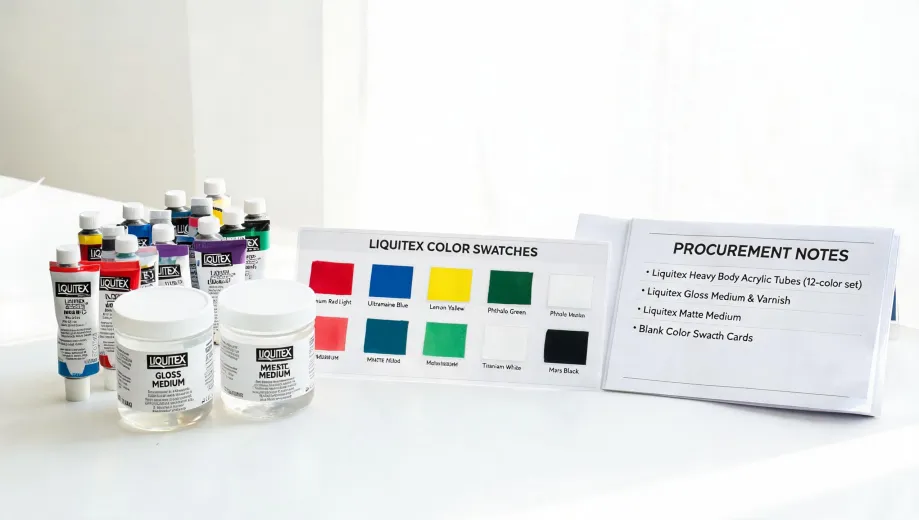
I’m an office administrator for a 120-person art school. I manage supply ordering—roughly $55k a year across 9 vendors. Maybe $58k, I’d have to check the system. I report to both operations and finance, so my job is to balance the art department’s wish list with the budget. When I took over purchasing in 2020, I quickly learned that art teachers and procurement people speak different languages.
This comparison is between two Liquitex product families: Liquitex acrylic paint colors (tubes, bottles, and jars) and Liquitex acrylic spray paint (aerosol cans). I’m not a paint chemist, so I can’t speak to pigment load in the way a studio instructor would. What I can tell you is how both options behave when you order them by the case, store them, and hand them to a room full of painters.
The Comparison Framework
We looked at five dimensions:
- Color range and mixing control
- Coverage and application
- Cleanup and safety
- Shelf life and storage
- Ordering and receiving logistics
If you expect one product family to win every category, you’ll be surprised. I was.
Color Range and Mixing Control
The Liquitex acrylic paint colors lineup is huge. Heavy body, soft body, fluid, professional, basic—if a teacher needs a specific hue, I can usually find it in the catalog. More importantly, colors can be mixed on a palette. That flexibility is the main reason most classrooms start here.
Liquitex acrylic spray paint is different. The palette is solid but much smaller. You can layer and blend with spray techniques, but you can’t mix a custom pastel the way you would in a jar. You buy what’s in the can.
This is also where I have to be careful about safety claims. Liquitex has a range of cadmium-free colors, which is helpful for classroom use. But I don’t assume every color is non-toxic. I check the label and the SDS before approving an order. That’s not a judgment on the brand; it’s just what purchasing people should do.
If you’re matching a printed school logo by eye, stop. The Pantone system exists because color isn’t a universal language. Industry-standard color tolerance is often Delta E under 2 for brand-critical colors, but paint has its own drying shifts. Use a physical swatch and test the dried paint before you order a full case.
Verdict: For color flexibility, Liquitex acrylic paint colors win. That won’t surprise anyone.
Coverage and Application
For paint colors, coverage depends on surface, thickness, and number of coats. Brushes give control, but they also create cleanup work.
For spray paint, coverage is faster and usually more even on large or irregular surfaces. But overspray is real. A small assignment can turn into a paint party if the classroom isn’t prepped.
From a purchasing perspective, I always ask two questions: What are they painting, and how much time do they have? If the answer is “25 canvases over a few weeks,” paint colors are easier to manage. If it’s “one 6-foot panel for the spring art show,” spray paint saves real time.
Verdict: This one depends more on the project than on the product. Spray covers fast; colors control better.
Cleanup and Safety
Liquitex acrylic spray paint is water-based, and while it’s wet, it cleans up with soap and water. That’s similar to the tube colors.
But spray paint creates atomized particles. That means ventilation matters, and so does proper respiratory protection. I’m not a safety specialist, so I leave the specifics to the teacher and the SDS. My job is to make sure the SDS is in the order and that the classroom has a plan before the cans arrive.
Verdict: Neither is complicated, but spray paint has more safety setup. For a busy classroom, that can be a deciding factor.
Shelf Life and Storage
Here’s the surprise for me. I assumed tubes and jars would be the storage headache, but in practice they’re more forgiving. Keep them sealed and avoid freezing, and they’ll be fine.
Aerosol cans are pressurized. They don’t like heat, and they don’t stack as neatly in a supply closet. In 2023, I stored some cans near a heater and a nozzle clogged. No disaster, but it was a reminder that spray paint needs its own space.
Verdict: Liquitex acrylic paint colors are easier to store long-term. I didn’t expect that when I started this comparison.
Ordering and Receiving Logistics
Tube colors ship like any other supply. You can order individual colors, store them on regular shelves, and distribute them directly to classrooms.
Spray paint can be trickier. Some suppliers ship aerosols ground only because of pressure and shipping regulations. This varies by carrier and supplier, so always confirm before you promise a teacher a delivery date. I found this out when I was one click away from an express order that would have been delayed. Dodged a bullet there.
I also learned the hard way that “case” doesn’t mean the same thing to every person. A teacher asked for a case of Liquitex acrylic paint colors. I heard a box of 12. They meant a 6-pack. Nobody was wrong, but the mismatch cost us time and a return label. Now I confirm quantities in writing.
Verdict: For predictable ordering, paint colors win. Spray paint is manageable if you verify shipping rules first.
The Math You Should Run Before Ordering
Ordering art supplies is mostly math. The numbers that matter are coverage, storage, and equipment cost. I use free online tools for all three.
Coverage Math
For Liquitex acrylic paint colors, start with the label’s coverage estimate and multiply by the number of coats. For Liquitex acrylic spray paint, check the can’s square-foot coverage. A teacher once asked for enough spray paint to cover a 4x4 panel. Without primer and two coats, the original estimate was less than half of what we actually needed.
That’s the prevention part. Five minutes of checking the label is cheaper than five days of waiting for a reorder.
Storage Math and the Cubic Yard Calculator
I use a cubic yard calculator to plan storage for large orders. It sounds like overkill, but when four classrooms share one supply closet, volume matters. A case of aerosol cans takes up more cubic space than a case of 80ml tubes, and the cans shouldn’t be stacked carelessly.
Running the cubic yard calculator before ordering helped us tell facilities whether we needed a shelf or a pallet. That simple check prevented a hallway full of boxes during our 2024 vendor consolidation project.
Equipment Decisions and the Rent vs Buy Calculator
If your department wants to do large spray projects, run the equipment math before buying anything. A one-off mural probably doesn’t justify a new spray setup. A rent vs buy calculator can show the break-even point based on days used, equipment cost, and maintenance.
For our school, the answer so far has been “buy cans for small assignments, plan ahead for big walls.” But that could change if we get a dedicated studio space.
I’ll admit I’m a fan of niche calculators. A student once showed me a blox fruits calculator for a Roblox game, and it made me laugh—but it also proved the point. The more specific the input, the better the estimate. A cubic yard calculator, a rent vs buy calculator, even a blox fruits calculator: they all work because they force you to define your assumptions. Ordering paint without defining assumptions is how you end up with too much white and not enough burnt sienna.
What I Recommend
If your teachers do canvas work, mixed-media classes, or anything that needs custom color matching, order Liquitex acrylic paint colors. They’re easier to store, easier to distribute, and easier to fix if you over-order.
If your projects are large, fast, or need a smooth coat on nonporous surfaces, Liquitex acrylic spray paint is worth the extra logistics. Just confirm ventilation, shipping, and storage before you commit.
Neither is universally better. It depends on your classroom, your storage, and your deadline.
Final Thought: Check Before You Box It
Five minutes of verification beats five days of correction.
That checklist I created after my second over-order has saved us an estimated $4,000 in avoided rework and return shipping. It’s not glamorous. It’s just the difference between reading the label and assuming the label.
Check coverage, storage, shipping, and product codes. Then order.
This was accurate as of January 2025. Suppliers and shipping policies change, so verify current rules before you finalize a purchase order.

Elena Baptista
Elena Baptista is an office printing and imaging analyst covering laser and inkjet printers, multifunction devices, copiers, label and receipt printers, ink cartridges, toner cartridges, and drum units. She applies ISO/IEC 24734, ISO/IEC 24711, and ISO/IEC 19798 methods while comparing print speed, first-page time, duplex throughput, duty cycle, page yield, coverage assumptions, resolution, color consistency, energy use, and maintenance intervals. Her guides help offices, schools, dealers, and procurement teams match output volume, media handling, connectivity, consumable economics, service access, and fleet-management requirements.