A Buyer's 5-Step Liquitex Product Checklist: How to Order Better (and Stop Waste)
-
Who This Is For
-
Step 1: Start with a Real Needs Audit (Not What You "Think" You Need)
-
Step 2: Choose the Right Product Series for the Job
-
Step 3: Get Clear on Pricing (and the Hidden Costs)
-
Step 4: Always Get a Sample or Test First
-
Step 5: Build a Vendor Relationship That Works for You
-
Common Pitfalls to Avoid
Who This Is For
This is for anyone responsible for ordering Liquitex products—whether you're stocking an art classroom, a university studio, or a small retail space. You've got a budget. You need the right stuff. And you want to avoid the headaches that come with wrong orders, expired stock, or hidden costs.
Here are the 5 steps I use. They've saved me time, money, and a few awkward conversations with my VP after things went wrong.
Step 1: Start with a Real Needs Audit (Not What You "Think" You Need)
Look, it's easy to buy the same things you always buy. But that's how you end up with 12 bottles of unopened gesso or a class set of colors nobody asked for.
List exactly what products you need—by series (Heavy Body, Soft Body, Ink, Gouache), size, and quantity. If you're ordering for a course, get the syllabus. If you're ordering for a studio, ask the artists. Don't guess.
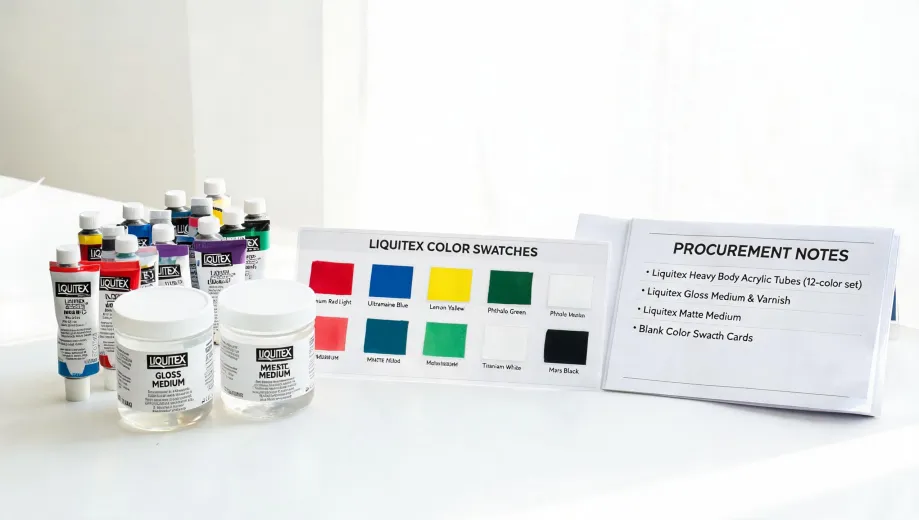
Here's a pro tip: Get the color chart and mixing chart PDFs from the official site before you place a single item in your cart. This eliminates the "oh, I didn't know that color only comes in Basics" moment later. (Source: Liquitex official downloads page, colors and series verified as of 2025).
I skipped this once. Thought I knew the range. Ended up ordering Soft Body when the teacher specifically needed Heavy Body. That cost us a rush re-order and a $25 restocking fee.
Step 2: Choose the Right Product Series for the Job
Liquitex has a system: Professional, Basics, and various specialty lines. Not all are right for every scenario.
- Professional Heavy Body: For serious canvases and techniques (impasto, layering). Higher pigment load. Costs more.
- Professional Soft Body: For airbrush, mixing, and fine detail. Smooth consistency.
- Basics: For students, large classes, and practice work. Lower pigment load, but still high quality. Budget-friendly.
- Acrylic Inks: For vibrant washes and high-flow applications. Very different from Heavy Body. (Our key product here).
Real talk: If you're buying for a high school intro class, don't load up on Professional Heavy Body sets. Get the Basics sets. They're good enough, and you'll stretch the budget further. If you're buying for a professional artist residency, don't cheap out on Basics—they'll notice the difference.
Between you and me, I recommend Liquitex for educational settings because of this range. It's one brand system from beginner to pro. That simplifies ordering and stocking a lot.
But here's the honest limitation (because I hate recommending things blindly): If you need a wide range of oil paints or watercolors, Liquitex isn't for you. They focus on acrylics. That's their strength. Don't try to force it.
Step 3: Get Clear on Pricing (and the Hidden Costs)
Pricing varies wildly by vendor, volume, and whether you're buying from an art supply distributor, a big online retailer, or directly. Don't assume one price is the market rate.
Here's a rough idea (based on 2025 quotes from major online and catalog suppliers; always verify current rates):
Small set (e.g., 6x 2oz tubes of Basics Acrylics): $15–$30.
Class pack (e.g., 12x 4.7oz tubes of Heavy Body): $80–$150, depending on colors.
Acrylic Inks (1oz bottle, single color): $7–$12 per bottle. Sets (6x colors): $40–$70.
Mediums (8oz bottle, e.g., Gloss Medium & Varnish): $15–$25.
But the real cost isn't just the unit price. It's the hidden stuff.
"We didn't have a formal approval chain for rush orders. Cost us when an unauthorized rush fee showed up on the invoice."
I learned this the hard way. I found a great price on Liquitex acrylic inks from a smaller vendor—$12 cheaper per set than our regular supplier. Ordered 50 sets. They couldn't provide a proper PO (purchase order) or invoice that matched our accounting system. Finance rejected the expense. I ate $600 out of my department budget. Now I verify vendor invoicing capability before placing any order.
Check for:
- Shipping costs: Art supplies are heavy. Ink and medium bottles break if packed poorly. I've had damaged shipments and no recourse because I didn't check the return policy first.
- Minimum order requirements: Some wholesale suppliers require a $200 minimum. Others charge fees below that.
- Tax exemption: If you're a school, you should be tax-exempt. Make sure your vendor has your certificate on file.
Step 4: Always Get a Sample or Test First
I know—you're busy. But this one step eliminates the most expensive mistake: ordering the wrong product at scale.
Order just one bottle of each Liquitex product you're considering—one Heavy Body, one Soft Body, one Ink, one Medium. Let the actual user (teacher, artist) test it for application, color, and feel. This takes 2–3 days and costs $20–40. Compare that to a $500 batch order that gets rejected because the paint is too thin or the wrong finish.
Skipped the test once. Thought 'what are the odds?' The odds caught up with me when the teacher said the Soft Body was too runny for her impasto lesson. Had to reorder Heavy Body at list price. $400 mistake. Period.
Ever since that experience, I created a verification checklist for art supply orders. Should have done it after the first time (the third time I finally did). The process gap was real.
Step 5: Build a Vendor Relationship That Works for You
This is the step most procurement lists miss. You're not just buying paint sets—you're managing a relationship that affects your workflow.
Ask potential vendors: Do you offer volume discounts on Liquitex sets? Do you have a dedicated B2B portal? What's your return policy for unopened stock? How do you handle rush orders?
The upside of sticking with a good vendor: consistent pricing, faster order processing, and less paperwork. The risk of switching to a cheaper one: variable quality control, bad invoicing, and no accountability. I calculated the worst case: a complete failed order at $1,500. The best case: $200 saved on inks. The expected value said go for it, but the downside felt catastrophic. I stuck with the known vendor. That was a good call.
Also, consider that some online printers for marketing collateral (like your class supply order forms or art show flyers) have different pricing models. Not directly related to Liquitex, but worth noting: if you're doing any print collateral for your art program, budget $80–$150 for 1,000 black-and-white flyers from an online printer (based on January 2025 quotes from Vistaprint and UPrinting). Verify current pricing.
Common Pitfalls to Avoid
- Ordering based on unit price alone. The $8 bottle of Liquitex Ink versus the $6 bottle? If the $6 vendor charges $15 shipping per order and the $8 one ships free on orders over $100, you're actually paying more for the "cheap" one.
- Not verifying color availability. That specific fluorescent pink? Might be discontinued. Check the brand's official site (liquitex.com) before making a list.
- Assuming all Liquitex products are compatible. Mostly true, but some mediums and varnishes have specific instructions (e.g., certain varnishes aren't for use on unprimed surfaces). Check the product specifications.
- Ignoring shelf life. Acrylic paint doesn't last forever. Check the manufacturing date on the bottle if you can. Old paint separates or dries out. For inks, the shelf life is generally 2–3 years from production.
- Forgetting to train your staff. The person placing the order might not know the difference between Liquitex markers and Liquitex inks. Make sure they have access to the Liquitex color chart and mixing chart PDFs from the official site.
Even after choosing a vendor or a product set, I kept second-guessing. What if the new Liquitex acrylic inks were overpriced? What if I'd missed a better deal? I didn't relax until the delivery arrived on time, correct, and the teacher said, "These inks are perfect for my fluid painting demo." That positive signal told me I made the right call.
So there you have it. Five steps, a few hard-learned lessons, and a clear way to avoid the common procurement mistakes. Liquitex is a great system for acrylic-based art programs, schools, and professional studios—but only if you buy smart. Good luck.
Elena Baptista
Elena Baptista is an office printing and imaging analyst covering laser and inkjet printers, multifunction devices, copiers, label and receipt printers, ink cartridges, toner cartridges, and drum units. She applies ISO/IEC 24734, ISO/IEC 24711, and ISO/IEC 19798 methods while comparing print speed, first-page time, duplex throughput, duty cycle, page yield, coverage assumptions, resolution, color consistency, energy use, and maintenance intervals. Her guides help offices, schools, dealers, and procurement teams match output volume, media handling, connectivity, consumable economics, service access, and fleet-management requirements.