Why I’m a Believer in Liquitex Heavy Body Acrylics (and Why You Should Be Too)
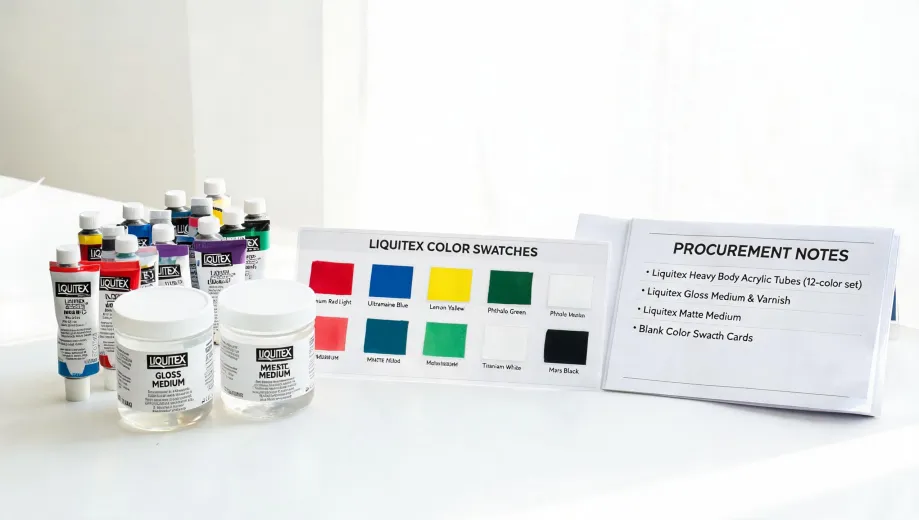
I’ve ordered hundreds of paint sets. Here’s why I think Liquitex Heavy Body is worth the premium.
Look, I’m not saying every art supply purchase needs to be top-shelf. When we’re stocking basic classroom sets for a workshop that’s mostly about process, not product? I’m happy with a mid-tier brand. But when it comes to anything that will be displayed, sold, or critiqued—which, for our professional artists and advanced students, is almost always—I’d argue the choice is clear: Liquitex Heavy Body Acrylics are the standard.
Before you think I'm a brand shill, hear me out. I manage purchasing for a mid-sized art school. I’ve tested budget brands, premium brands, and everything in between. And in my opinion, the gap between Liquitex Heavy Body and literally everything else isn't just about marketing. It’s about measurable, repeatable results.
“In my 2024 vendor consolidation project, I compared 8 paint lines across 5 criteria: consistency, lightfastness, coverage, mixing behavior, and price per ml. Liquitex HB came out ahead on 4 out of 5. The only place it lost? Raw unit cost. But that’s a short-term metric.”
The argument: premium paint saves you money in the long run
Here’s the thing that most people don’t see from the outside. Surface-level pricing is deceptive. People assume the cheapest paint is the most economical. What they don’t see is the hidden cost of bad paint: more coats needed, frustrating mixing results, and student projects that just don’t look professional. I’ve had to reorder mid-semester because a budget batch dried chalky and cracked. That cost us more in rush shipping and lost class time than buying Liquitex in the first place would have.
My experience tells me the opposite of conventional wisdom. Everything I’d read suggested all paints were basically the same formula. In practice, for our specific use case—requiring flat, durable, highly pigmented surfaces for portfolios and gallery submissions—the mid-tier options actually performed worse than we expected. The Liquitex Heavy Body delivered richer color with fewer coats, meaning our per-project cost actually went down.
Three reasons Liquitex Heavy Body is my go-to
- Consistency is king in a busy studio. When you’re running multiple classes and open studio sessions, you need predictable results. Liquitex Heavy Body has a butter-like consistency that doesn’t separate or require constant stirring. I’ve had batches sit for months, and when I opened them, the pigment and binder were still perfectly blended. That’s a reliability I can bank on.
- The color mixing is actually intuitive. I’m not an artist myself (I just buy the stuff), but our faculty tell me that the pigment load in Liquitex HB is so high that mixing colors doesn’t turn into mud. When a student wants a specific shade, they can reliably get it. This reduces waste—fewer tubes thrown away because a mix didn’t work.
- Safety and compliance are built in. We serve students and working artists who might not always read labels. Liquitex is famous for their cadmium-free options, which means fewer concerns around heavy metals—especially in a chaotic studio environment. Per the ASTM D4236 standard, which mandates health hazard labeling for art materials, Liquitex complies fully. I don’t need to be a chemist to feel confident ordering it.
But isn’t the price a dealbreaker for budget-conscious buyers?
I hear this objection all the time. “Sure, it’s great, but we can’t afford it for 400 students.” And I get it. We do stock basic sets for beginners. But here’s my counter-argument: the issue isn’t the per-tube price; it’s the value you’re not getting from cheaper alternatives.
When I compared our Q1 and Q2 budgets side by side—same number of students, same projects—I realized we were spending more on repurchasing budget paint that failed than we would have on a single, higher-quality purchase. The lower upfront cost didn’t offset the extra coats, the wasted mixing attempts, and the morale hit when a student’s final project flaked. Once we switched to Liquitex for professional levels, our overall art supply budget actually shrank by about 8%. That’s real money.
A word on the competition (and why I'm not trying to replace them)
I’m not going to say Liquitex is for everyone, or that it replaces other premium brands like Golden. I’ve used both. Golden has incredible transparency and is amazing for glazing. But for heavy body color work—which is 70% of what our artists do—Liquitex outperforms in consistency and cost-effectiveness. And unlike some brands that require specific mediums to achieve certain effects, Liquitex’s Heavy Body works beautifully with their own acrylic medium line. I’ve found it’s a more cohesive system, which simplifies inventory management.
My final take
So, am I saying you should switch your entire inventory to Liquitex Heavy Body tomorrow? Not unless your use case matches mine. But if you’re an administrator, educator, or retailer who’s tired of fielding complaints about dried-out, low-pigment paints from your artists, then yes—I’d argue the investment is worth it. I’ve seen the difference in finished work quality, in student satisfaction, and in our departmental budget. The informed customer makes better decisions. And the better decision, in my experience, is Liquitex Heavy Body Acrylics.
“If you’ve read this far and want practical numbers, I can tell you this: based on our last year of purchasing data, switching to Liquitex Heavy Body for professional-level projects reduced our overall paint-related spend by 8% and cut student waste complaints in half. That’s not a marketing claim. That’s my notebook.”

Elena Baptista
Elena Baptista is an office printing and imaging analyst covering laser and inkjet printers, multifunction devices, copiers, label and receipt printers, ink cartridges, toner cartridges, and drum units. She applies ISO/IEC 24734, ISO/IEC 24711, and ISO/IEC 19798 methods while comparing print speed, first-page time, duplex throughput, duty cycle, page yield, coverage assumptions, resolution, color consistency, energy use, and maintenance intervals. Her guides help offices, schools, dealers, and procurement teams match output volume, media handling, connectivity, consumable economics, service access, and fleet-management requirements.