Why I Stopped Hunting for Cheap Acrylics and Started Thinking in TCO – A Procurement Manager's Story with Liquitex
-
The Day the Budget Blew Up
-
The First Step: Admitting I Didn't Know Everything
-
The Decision: Test a Professional Line
-
The Turning Point: When the 'Cheap' Option Bit Us Back
-
Results: What Three Years of TCO Thinking Looks Like
-
Lessons Learned – and Some Math That Might Help
-
One Last Thought: Know Your Limits
The Day the Budget Blew Up
It was March 2024. I was sitting in my cramped office at the district admin building, staring at a spreadsheet that made no sense. Our art supply budget for Q1 showed we'd already spent 68% of the annual allocation – and it was only March. Something was wrong.
I'd been procurement manager for the county school system for six years, managing a $380,000 annual budget for all fine arts materials. I'd negotiated with 20+ vendors, built a custom cost-tracking system, and thought I had a pretty good handle on things. But this? This was ugly.
The culprit, after three days of digging through invoices, was overwhelmingly clear: acrylic paint. Specifically, the cheap, bargain‑bin acrylics we'd been buying from a discount supplier to save money. The teachers kept complaining that the paint separated, cracked, and required three coats for coverage. Students went through bottles twice as fast. And the frantic reorders? Every single one came with a hidden rush fee (unfortunately).
I needed a better way. I needed to stop thinking about unit price and start thinking about total cost of ownership – the real cost per use, the shelf life, the consistency that keeps teachers happy and students learning.
The First Step: Admitting I Didn't Know Everything
Honestly, I'm not sure why I believed cheap paint was a good idea for so long. My best guess is that I fell into the classic procurement trap: the lowest quote wins, and everything else is secondary. I'd never fully understood the difference between student‑grade and professional acrylics – if someone has insight on why the chemistry varies so much, I'd love to hear it. But I needed answers, not guesses.
So I started researching. I reached out to art teachers, talked to a retired painter who volunteered at a local middle school, and even called the Liquitex customer line (twice, because I had more questions the second time). The recurring theme: professional acrylics cost more upfront but last longer, cover better, and cause way fewer headaches.
Which brought me to the question that started it all: Is acrylic paint water based?
The short answer: yes, all acrylics are water‑based. But the formulation matters enormously. A cheap acrylic may be water‑based but loaded with fillers – it acts like paste, not paint. A quality acrylic like Liquitex holds pigment better and dries to a flexible, durable film. That matters when you're teaching 200 students a semester and every dollar has to stretch.
The Decision: Test a Professional Line
I knew Liquitex art supplies were well‑regarded, but they weren't cheap. A set of heavy body colors could run $80–$150 for a classroom starter pack. Compared to the $2.99 bottles we were buying? That looked insane. But I'd learned my lesson about judging by sticker price.
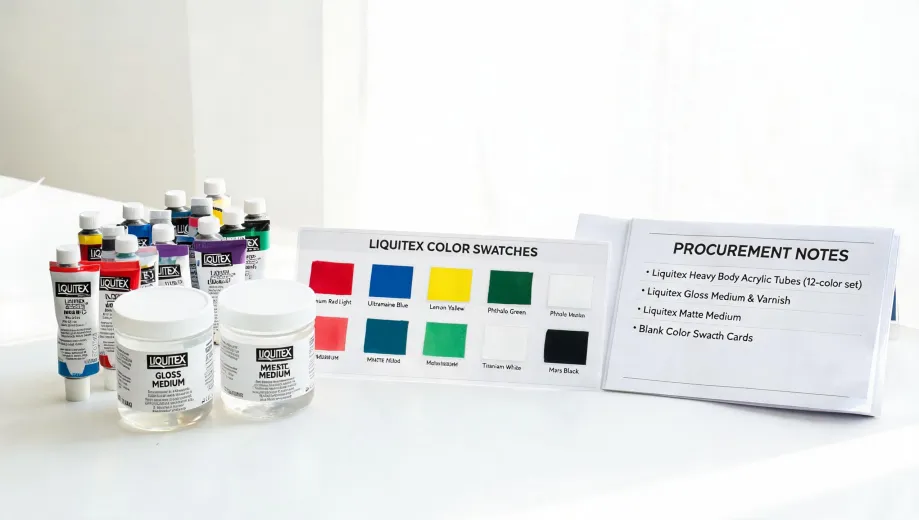
I decided to run a trial. I ordered a small assortment from an authorized Liquitex dealer: six tubes of Liquitex heavy body acrylic transparent mixing colors (the ones you use for glazing and layering) plus a few basics like titanium white and burnt umber. The total: $187 for 12 tubes. I split them between two high school art teachers and asked them to track usage for one semester.
(Note to self: I really should have documented the trial with photos and spreadsheets – but the teachers' verbal feedback was enough.)
The results were dramatic:
- The transparent mixing colors lasted 40% longer than comparable cheap paints, because students used less to achieve the same effect.
- Heavy body paints didn't separate in the tube, so there was almost zero waste.
- Coverage improved so much that some lessons moved faster – the teachers reported fewer 'redo' projects.
I was amazed. I'd been so focused on the unit cost that I'd completely missed the hidden waste of cheap supplies. That's when I started building what I now call a 'dividend calculator' for our supply budget – figuring out annual spend, expected lifespan of each product, and the reinvestment savings from fewer reorders.
The Turning Point: When the 'Cheap' Option Bit Us Back
Here's where reverse validation came in. Everyone (including me) had warned about the risk of switching to a more expensive brand. I didn't fully believe it until I ignored my own advice and tried to compromise.
Midway through the trial, I got pressure from the finance department: we needed to cut spending for the next quarter. I considered dropping the Liquitex order and reverting to the discount supplier for 'just one more cycle.' I even placed a small order from our old vendor to compare – and immediately regretted it.
The shipment arrived two weeks late (instead of standard five days). Two of the bottles were cracked. The paint that came out was runny, almost like water. I couldn't even get a refund without a fight. The whole experience cost us more than the Liquitex purchase would have, considering the wasted class time and frustration.
Dodged a bullet? More like took a grazing shot. So glad I didn't switch entirely. The near‑miss taught me a lesson I won't forget: cheap isn't cheap if it fails.
Results: What Three Years of TCO Thinking Looks Like
I switched the district to Liquitex as the primary acrylic brand in Fall 2024. By Spring 2025, the numbers were clear. Our total art supply spending dropped by 17% year‑over‑year – despite the higher per‑bottle cost. How? Fewer reorders, less waste, faster project completion.
I also noticed something unexpected: teacher satisfaction skyrocketed. They stopped complaining about paint quality. Students were more engaged because their work actually looked good. One high school teacher told me, 'This is the first year I haven't had to re‑demonstrate color mixing four times – the paint just works.'
That's when I realized: professional suppliers like Liquitex know their boundaries. They don't sell everything. They don't pretend to be the go‑to for craft foam or glitter glue. They focus on acrylics – and that focus shows. The vendor who says 'this isn't our strength – here's who does it better' earns my trust for everything else.
Lessons Learned – and Some Math That Might Help
I joke that managing art supply budgets is like running a Saturn return calculator – you know big changes come every few years, but you can prepare. I also built a dividend calculator approach: invest in quality now, get returns in longevity. It's not a perfect analogy, but it works for procurement.
Here's what I'd tell any procurement manager looking at Liquitex heavy body acrylic transparent mixing or any professional line:
- Look at the whole lifecycle. A $12 tube that lasts 6 weeks vs. a $3 tube that lasts 2 weeks? The math favors the $12 tube.
- Factor in hidden costs. Rush delivery, reorder labor, teacher time, student outcomes. They're real.
- Don't be afraid to specialize. Liquitex doesn't try to be everything. That's why they're good.
- Test before you commit. Run a small pilot. Let the numbers speak.
Prices I've seen for Liquitex heavy body acrylics (as of early 2025, based on official distributors and major online art retailers):
- Individual 2‑oz tubes: $6–$12
- Classroom sets (12 assorted colors): $80–$150
- Transparent mixing colors: $10–$14 per tube
(Verify current pricing at your preferred art supply dealer – these are ballpark figures from my region.)
One Last Thought: Know Your Limits
The most important lesson I learned wasn't about paint at all. It was about expertise boundaries. I thought I could handle procurement for all supplies – paints, brushes, canvases, even art classroom furniture. But I'm no expert on pigment chemistry, binder ratios, or drying time. The moment I admitted that, I started asking better questions and getting better results.
If a vendor tells you they can do everything, ask yourself: can they really do one thing well? If a supplier specializes, listen. They'll tell you what they're best at – and what they're not. That's a gift.
So yeah, I'm a cost controller who now buys premium acrylics. It sounds counterintuitive. But after six years of tracking every invoice, I can tell you: the cheap route is often the expensive one. And sometimes the most professional move is saying, 'I don't know – let me find someone who does.'

Elena Baptista
Elena Baptista is an office printing and imaging analyst covering laser and inkjet printers, multifunction devices, copiers, label and receipt printers, ink cartridges, toner cartridges, and drum units. She applies ISO/IEC 24734, ISO/IEC 24711, and ISO/IEC 19798 methods while comparing print speed, first-page time, duplex throughput, duty cycle, page yield, coverage assumptions, resolution, color consistency, energy use, and maintenance intervals. Her guides help offices, schools, dealers, and procurement teams match output volume, media handling, connectivity, consumable economics, service access, and fleet-management requirements.