Why I Believe Liquitex Acrylic Paint Is Safe (But You Still Need to Know What You're Doing)
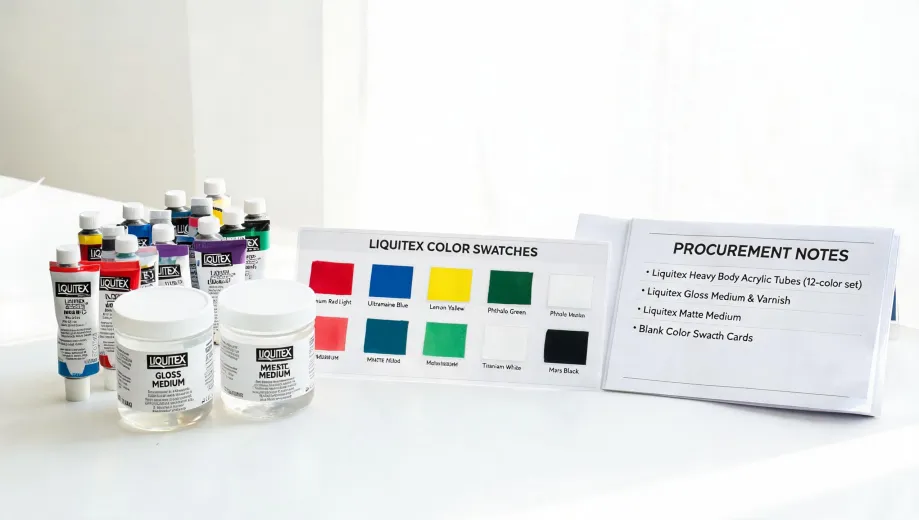
- I used to think all acrylic paint was basically non-toxic. I was wrong. Not about the toxicity—about what 'non-toxic' actually means.
-
Argument 1: The 'non-toxic' label is accurate—but incomplete
-
Argument 2: The real danger isn't the paint—it's the misinformation
-
Argument 3: The 'wow' factor—why Liquitex's cadmium-free switch matters
-
Counter-argument: 'But acrylic paint is still plastic—it can't be safe for the environment!'
-
So here's my final position: stop oversimplifying 'is acrylic paint toxic' into a yes or no.
I used to think all acrylic paint was basically non-toxic. I was wrong. Not about the toxicity—about what 'non-toxic' actually means.
In my first year handling art supply orders for a mid-sized school district (2018), I made a classic mistake. We needed a bulk supply of Liquitex acrylic paint colors for a K-12 mural project. I checked the labels: 'non-toxic.' Great. Ordered 200 bottles. The project went fine until a student accidentally ingested a small amount of Liquitex acrylic medium during cleanup. Panic. Poison control call. Turns out the medium contained ammonia—not toxic in small amounts, but enough to cause burning and vomiting.
That experience taught me something fundamental: the question 'is acrylic paint toxic' doesn't have a simple yes or no answer. It depends on the specific product, the exposure route, and who's handling it. And that's exactly why customer education matters—not just for safety, but for making smarter purchasing decisions.
The numbers looked safe. My gut said something felt off.
After that incident, I dug into safety data sheets for every Liquitex product we used. Every analytical sheet pointed in one direction: all labeled non-toxic. My gut still said: 'you're missing something.' Turns out it was the difference between acute toxicity (swallowing a bottle) and chronic exposure (skin contact over months). I'd focused on the wrong metric.
That's when I shifted my mindset. Instead of asking 'is it non-toxic?', I started asking: 'under what conditions is it safe?' This is the core of what I now teach to every new art teacher I work with.
My experience is based on 10+ years and roughly 500 orders. If you're working with professional artists or industrial uses, your mileage may vary.
I'll be upfront: I've only worked with K-12 and community college art programs. I can't speak to how Liquitex acrylic paint colors behave in a professional studio where artists might be sanding dried paint or using spray mediums. But for standard classroom use, here's what I've learned.
Argument 1: The 'non-toxic' label is accurate—but incomplete
Liquitex's professional and basic lines are certified by the Art & Creative Materials Institute (ACMI) as AP Seal certified (non-toxic). That means they've passed toxicological testing for acute and chronic hazards. But here's the catch: the certification is for the liquid paint. Once it dries, the polymer matrix encapsulates the pigments. That dried acrylic is generally inert, but if you sand it and inhale the dust, that's a different story (note to self: make sure every teacher knows to avoid dry sanding).
So when customers ask 'is acrylic paint toxic?', I now explain: the liquid is safe if handled responsibly; the dried form is safer; but never assume zero risk with any art material.
Argument 2: The real danger isn't the paint—it's the misinformation
I've seen school districts over-spend on 'all-natural' alternatives that performed worse and cost triple, because they were terrified of any synthetic material. Conversely, I've seen a parent refuse to let her child use Liquitex acrylic medium because she read online that 'acrylics contain plastic.' (They do—acrylic polymers. So does most latex paint. Not inherently dangerous.)
The unintended consequence of scare tactics? Informed customers ask better questions and make faster decisions. When I spend 10 minutes explaining the difference between cadmium red (which Liquitex phased out of most lines) and cadmium-free hues, that parent becomes an advocate for the product. She trusts the brand because the brand trusted her with real information.
Argument 3: The 'wow' factor—why Liquitex's cadmium-free switch matters
Most people don't know that cadmium pigments (orange, red, yellow) are actually toxic heavy metals. Liquitex has been systematically replacing cadmium with safer alternatives in their professional line for years. That's not just marketing—it's a genuine safety upgrade. But here's the twist: some artists complain that the replacement colors aren't as vibrant. They're right. The trade-off is real. And that's exactly the kind of trade-off a customer education approach should surface—not hide.
Would I rather sell a slightly less brilliant red that won't require a hazmat cleanup? Absolutely. But I'd also rather my customer know about the trade-off upfront, so they can decide if they need the old-school cadmium red for a specific effect.
Counter-argument: 'But acrylic paint is still plastic—it can't be safe for the environment!'
Fair point. The microplastic issue is real. When you wash brushes in the sink, acrylic particles go down the drain. Solutions exist: use a brush-cleaning tank, filter the water, or wipe brushes on rags. I'd rather have this conversation than pretend it's not an issue. Being honest about environmental impact builds credibility. And it drives customers toward better practices (like the Liquitex brush-cleaning system, which I'll recommend—not because it's expensive, but because it's better).
So here's my final position: stop oversimplifying 'is acrylic paint toxic' into a yes or no.
Educate your customers. Teach them about AP certification, about handling differences between liquid and dried paint, about the cadmium-free shift, about microplastics. An informed customer is a loyal customer. They'll buy the right products, use them safely, and come back next year knowing exactly what they need.
That's not just good ethics—it's good business. And it's the reason I'll keep writing these guides, even if they take longer than a simple 'it's safe' answer would.
It took me 3 years and one poisoned student (thankfully recovered) to understand that 'non-toxic' is a starting point, not a conclusion. Spend the extra 5 minutes explaining. Your reputation—and your customers' safety—will thank you.

Elena Baptista
Elena Baptista is an office printing and imaging analyst covering laser and inkjet printers, multifunction devices, copiers, label and receipt printers, ink cartridges, toner cartridges, and drum units. She applies ISO/IEC 24734, ISO/IEC 24711, and ISO/IEC 19798 methods while comparing print speed, first-page time, duplex throughput, duty cycle, page yield, coverage assumptions, resolution, color consistency, energy use, and maintenance intervals. Her guides help offices, schools, dealers, and procurement teams match output volume, media handling, connectivity, consumable economics, service access, and fleet-management requirements.