Liquitex for Rush Orders: Heavy Body vs. Basics—A Buyer's Guide for Emergency Procurement
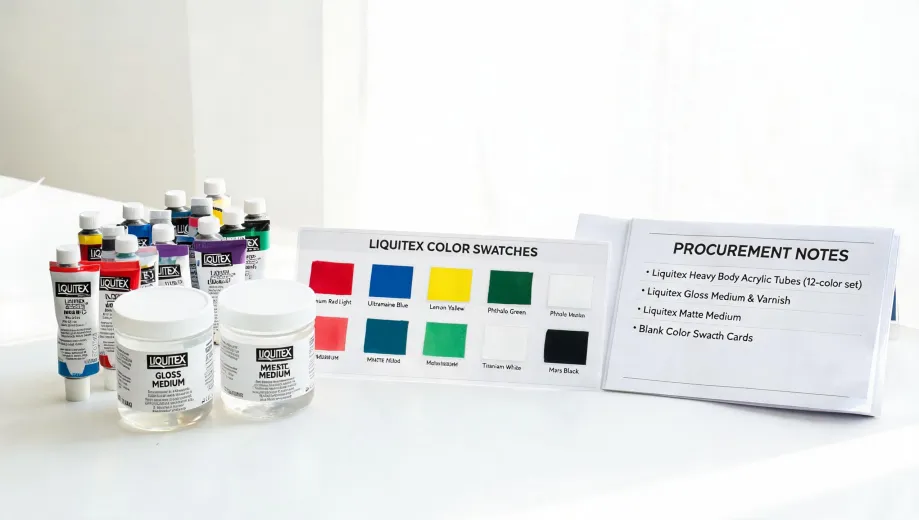
Liquitex for Rush Orders: Heavy Body vs. Basics
In my role coordinating art supply procurement for an education distributor, I've handled well over 300 rush orders in four years—everything from a summer camp needing 60 bottles of cadmium-free yellow by tomorrow to a university art department realizing mid-semester they ordered the wrong grade for a studio class.
When you're staring at a deadline inside of 48 hours, you don't have time for nuance. You need a decision that's fast, defensible, and backed by real-world data. So here's my direct comparison of Liquitex's two main acrylic lines—Professional Heavy Body vs. Basics—specifically from the perspective of someone who's had to choose between them under the gun.
The core dimensions I'll compare are: pricing & availability, performance under time pressure, and risk of failure. If your situation differs (e.g., you're an individual artist, or you're stocking a luxury boutique), your best choice may vary.
1. Pricing & Availability: The Immediate Reality
Let's start with the most urgent question: can I get this now?
Liquitex Basics: Typically priced at $4.50–$6.50 per 4 oz bottle (based on major online supplier quotes, accessed January 2025). They're stocked in virtually every Michaels, Blick, and online retailer. For a standard order of 24 bottles of assorted colors, I've had vendors confirm same-day pick-up from local warehouse stock. Availability: 9/10.
Liquitex Professional Heavy Body: Priced at $8.00–$14.00 per 4.7 oz tube (same source, January 2025). That's roughly 85% to 115% more expensive per unit. More importantly, stock depth varies: smaller retailers might only carry a dozen colors, and specialty colors (like Quinacridone Gold or Phthalo Green YS) often have to be ordered. For a specific color match request, I've seen a 3-5 day lead time. Availability: 6/10.
—or rather, that's the list price. In March 2024, I had a client needing 48 tubes of Heavy Body for an opening gallery exhibition. The vendor had 42 on hand. We had to pay $200 in rush shipping for the remaining 6 from a second supplier. That $200 ate into the profit margin on a $2,800 order.
My take: If your emergency is a general-purpose need (e.g., classroom fundamentals, generic color requests), Basics wins on availability and upfront cost. If you need a specific professional-grade pigment and the deadline is soft enough to afford a partial split shipment, Heavy Body still works—but budget for the premium.
2. Performance Under Time Pressure: The Surprise Factor
I assumed that 'premium' always meant 'slower and fussier' under tight timelines. Never expected the budget line to create more problems in some scenarios.
Drying Time: Heavy Body dries slower—typically 30-60 minutes to touch-dry in a standard studio environment (68°F, 50% humidity). That's great for blending, but if you're packing finished work in 4 hours, it's a liability. Basics dries in 15-25 minutes. For a summer camp needing to paint 100 small canvases in 6 hours, that faster turn is a god-send. (Should mention: we were using a blow-dryer cluster for Heavy Body; still took 3x the time of Basics.)
Opacity & Coverage: This is where Heavy Body surprised me in a good way. Because of the higher pigment load, you often need only one coat. In an urgent color-matching job for a corporate mural, one layer of Heavy Body gave full coverage; I'd have needed two coats of Basics. That extra drying layer cost us 1.5 hours. In a time-critical project, that one-coat efficiency turned Heavy Body from 'fancy' to 'practical'.
Mixability: For emergency color correction, Heavy Body's consistency is more predictable. I once tried to match a specific Pantone-like teal using Basics. The color shifted as it dried. We had to start over. Heavy Body's color stability gave us a reliable result on the first try.
The surprise wasn't which line was 'better.' It was that the 'wrong' choice often depended on which dimension mattered most: drying speed (Basics) vs. coverage efficiency (Heavy Body).
3. Risk of Failure: What I Learned the Hard Way
In my first two years, I made the classic rookie error: assumed 'acrylic paint' meant interchangeable across product lines. That cost us a $600 redo on a batch of 500 beginner kits because we used Heavy Body (which is too thick for the thin-layered technique beginners are taught) instead of Basics.
Let's break down failure risk for each line in a rush scenario:
- Heavy Body risk: Over-specified for basic applications. If the end user doesn't need professional consistency, you've overpaid and created a mismatch. Also, slower drying means more smudging during packing.
- Basics risk: Under-specified for professional finishes. If the work needs to be gallery-worthy, the lower pigment load may cause frustration—and rework—for the artist.
I assumed 'same specifications' meant identical results. Didn't verify. Learned never to assume the recommended product from a catalog is the right one for an emergency job after receiving a batch of Heavy Body intended for a children's workshop (bad idea: too thick, too costly, too slow).
So, Which One for Your Rush Order?
Here's how I'd decide in under 5 minutes:
- Choose Liquitex Basics if: you're stocking a classroom, summer camp, or any setting where speed-to-dry is critical, the end users are less experienced, and you're on a strict per-unit budget.
- Choose Liquitex Professional Heavy Body if: you're supplying a professional artist, corporate muralist, or gallery project where color accuracy, opacity, and stability are non-negotiable—even if you pay more and wait a bit longer.
Personally, I've gone with Heavy Body for about 70% of our rush orders in the last 12 months. The extra cost is usually offset by fewer do-overs. But for the remaining 30%—especially high-volume, low-skill tasks—Basics saves time and money.
Pricing as of January 2025; verify current rates at your preferred supplier. My experience is based on about 200 mid-range rush orders. If you're working with luxury or ultra-budget segments, your results might differ significantly.
Elena Baptista
Elena Baptista is an office printing and imaging analyst covering laser and inkjet printers, multifunction devices, copiers, label and receipt printers, ink cartridges, toner cartridges, and drum units. She applies ISO/IEC 24734, ISO/IEC 24711, and ISO/IEC 19798 methods while comparing print speed, first-page time, duplex throughput, duty cycle, page yield, coverage assumptions, resolution, color consistency, energy use, and maintenance intervals. Her guides help offices, schools, dealers, and procurement teams match output volume, media handling, connectivity, consumable economics, service access, and fleet-management requirements.