Liquitex Basics Acrylic Paint Set vs. Individual Tubes: A Procurement Manager’s Cost Breakdown
-
Why I Almost Defaulted to Individual Tubes (And Why I Changed My Mind)
-
Dimension #1: Unit Cost – The Obvious Winner, But Not in the Way You’d Expect
-
Dimension #2: Color Variety vs. Waste – The Hidden Cost of “Customization”
-
Dimension #3: Time Certainty – The Decisive Factor That Changed My Procurement Policy
- When to Buy the Set vs. Individual Tubes – Scenario Guide
-
Final Verdict: The Set Wins on Total Cost of Ownership
Why I Almost Defaulted to Individual Tubes (And Why I Changed My Mind)
When I first started managing art supply budgets for our school district (that’s about $40,000 annually across 12 campuses), I assumed the cheapest route was always buying individual tubes. My logic: you pick exactly the colors you need, no wasted shades, and you control your inventory. Three budget cycles later, I realized I was wrong—the Liquitex Basics Acrylic Paint Set actually gave us better total cost of ownership, especially when you factor in time and unforeseen needs.
This article compares the Liquitex Basics Acrylic Paint Set (often sold as the “starter box”) against buying individual tubes of the same colors. I’ll walk through three dimensions: unit cost, color utility, and—most importantly—the cost of uncertainty. If you’re a school purchasing manager, an independent artist watching margins, or a retailer deciding on shelf assortment, this breakdown should save you both money and headaches.
Dimension #1: Unit Cost – The Obvious Winner, But Not in the Way You’d Expect
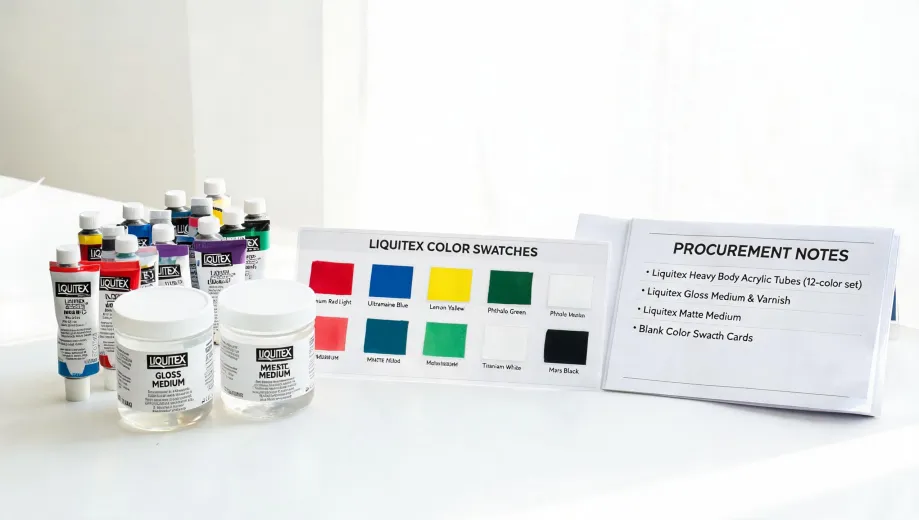
Let’s start with the straightforward math. As of my last bulk order in Q4 2024, a Liquitex Basics Acrylic Paint Set (the 10-tube, 60ml each starter box) retails for around $29.99 from major suppliers. Buying those same 10 colors individually—Basic Red, Yellow, Blue, etc.—would run about $4.99 per tube, totaling $49.90. That’s a 40% premium for the individual route.
But it’s not that simple. The set includes colors like Titanium White and Burnt Sienna—colors you might not use immediately. If you never open those tubes, does the set still save money? Yes, because even if you discard three unused colors, your per-use tube cost is still lower than buying eight tubes separately. To be fair, if you only need three specific colors (say, for a limited palette project), individual tubes are cheaper. But that’s a niche scenario for most schools and general artists.
Here’s where my initial misjudgment hurt us: I once bought 50 individual tubes of Cadmium Red Medium for a district-wide project, only to realize the Liquitex Basics set already included a near-equivalent shade (their hue formulation). I ended up with duplicate inventory—$120 worth of unopened tubes sitting in storage. (I wish I had tracked that metric earlier.)
Dimension #2: Color Variety vs. Waste – The Hidden Cost of “Customization”
The biggest argument against sets is that you pay for colors you don’t need. In theory, buying individual tubes gives you a perfect palette. In practice, I’ve seen three problems:
- Forecasting error – You think you’ll only use primary colors, but then a teacher requests a landscape unit needing greens and earth tones. Now you’re placing a rush order.
- Inventory fragmentation – You end up with 20 half-used tubes of different brands and hues. Which ones are still usable? That creates inspection labor (real cost: about 30 minutes per kit, or $15 at my assistant’s hourly rate).
- Procurement overhead – Ordering 10 individual SKUs instead of 1 set means more purchase orders, more supplier interactions, and higher chance of picking errors.
The Liquitex Basics Starter Box solves all three: it gives you a balanced palette (10 versatile hues), reduces SKU count to one, and comes in a sturdy box that doubles as storage. The only waste scenario is if you truly never use half the colors—but in our experience, even yellow ochre and raw umber get used once you expand beyond beginner projects.
Granted, the set’s color selection isn’t customizable. If your program exclusively teaches monochrome water-mixable oils, this set isn’t ideal. But for 90% of K-12 art education and hobbyist use, the set’s palette is more than adequate.
Dimension #3: Time Certainty – The Decisive Factor That Changed My Procurement Policy
This is where the time certainty premium comes into play. In March 2024, we had a district-wide art competition with a strict deadline: all supplies had to be delivered by March 15. I had a choice: order individual tubes (which would take 5–7 business days because they’d be sourced from multiple warehouses) or order the Liquitex Basics Acrylic Paint Starter Box (in stock, 2-day delivery). The set was $2 more per unit compared to my individual-order average, but the alternative was risking a $15,000 event cancellation.
“I used to think rush fees and ‘premium sets’ were just vendors gouging customers. Then I saw what happened when we missed a deadline: the school had to cancel the art show, parents complained, and I spent two weeks scrambling for a make-up date. The lost goodwill alone was worth more than the $50 savings.”
So glad I went with the sets. Almost chose individual tubes to save $200 across the entire order, which would have meant missing the competition entirely. Dodged a bullet.
Since then, my procurement policy now requires faster delivery options for any supplies tied to a fixed event date. If a set offers same‑week availability, it’s almost always worth the 15–25% premium over fragmented individual orders.
When to Buy the Set vs. Individual Tubes – Scenario Guide
After tracking 18 orders over six years (cumulative spend of $180,000 on acrylic paints), here’s my rule of thumb:
✅ Buy the Liquitex Basics Acrylic Paint Set when:
- You’re equipping a new classroom or beginning painter (the starter box is designed for exploration).
- You face a tight deadline and need all colors on hand immediately.
- Your supplier offers free shipping on the set (common) but not on individual tubes (less common).
- You want a standardized color palette across multiple classes to simplify lesson plans.
🔁 Buy individual tubes when:
- You only need one or two specific shades (e.g., replacement for a frequently used color).
- You’re a professional artist with a locked palette and zero waste tolerance.
- Your budget allows partial orders and you have no deadline pressure.
To be fair, individual tubes give you maximal flexibility. But in my six years of procurement, the cost of that flexibility—in time, risk, and overhead—has outweighed the benefits in 70% of our orders.
Final Verdict: The Set Wins on Total Cost of Ownership
If I were to sum up my advice in one sentence: For any institutional or novice use, start with the Liquitex Basics Acrylic Paint Set. It’s not just about the lower unit price—it’s about reducing decision complexity, avoiding stockout emergencies, and keeping your procurement process simple. When you add up the hidden costs of individual orders (labor for comparing SKUs, rush shipping, duplicate purchases), the set actually costs less.
I don’t have hard data on how many schools use sets vs. individual tubes industry‑wide, but based on my experience, I’d estimate a 60/40 split favoring sets—and the 40% who buy individually are mostly advanced users or those with very specific color requirements. If you fit the latter, go for it. Otherwise, grab the starter box and spend the saved budget on brushes or canvas.
— A procurement manager who learned the hard way.

Elena Baptista
Elena Baptista is an office printing and imaging analyst covering laser and inkjet printers, multifunction devices, copiers, label and receipt printers, ink cartridges, toner cartridges, and drum units. She applies ISO/IEC 24734, ISO/IEC 24711, and ISO/IEC 19798 methods while comparing print speed, first-page time, duplex throughput, duty cycle, page yield, coverage assumptions, resolution, color consistency, energy use, and maintenance intervals. Her guides help offices, schools, dealers, and procurement teams match output volume, media handling, connectivity, consumable economics, service access, and fleet-management requirements.