Choosing Liquitex Acrylics for Your Institution: A Buyer's Guide (Not Just Another Review)
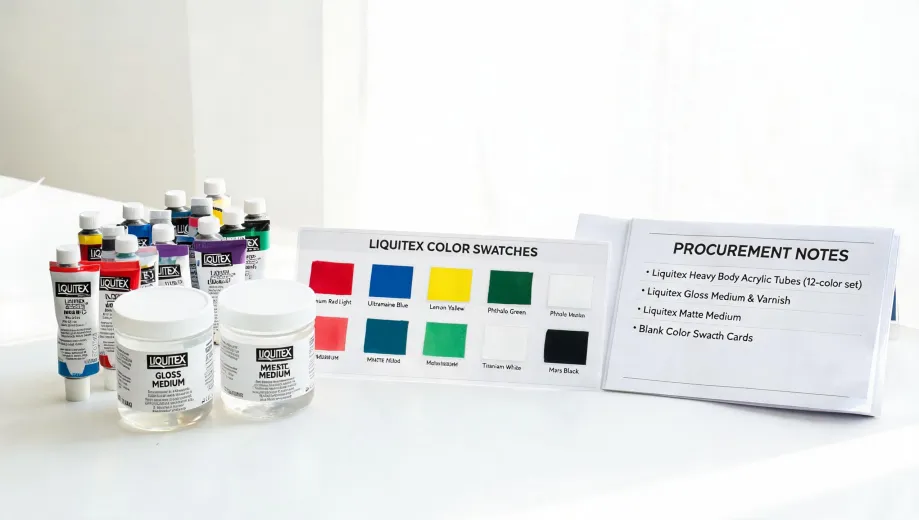
If you're tasked with sourcing art supplies for a school, a group of professional painters, or a retail shop, you already know there's no single "best" product. What works for a high school classroom will frustrate a working artist, and what a professional painter swears by will blow your budget if you’re ordering for sixty students. This guide is based on my experience managing procurement for a medium-sized educational supplier and a private art studio over the last five years.
I've tested the Liquitex line across several scenarios, and I'll break it down by the three most common situations I encounter. There is no universal champion.
Three Scenarios, One Brand
Before we get into the paint itself, let's figure out which bucket you're in. Most of my decisions come down to three factors: budget constraint, user skill level, and required durability.
Scenario A: The Cost-Conscious Classroom (K-12, community centers)
Scenario B: The Serious Studio (Professional artists, advanced university courses)
Scenario C: The Retail or Workshop Floor (Selling to mixed customers, hosting events)
Your priority will shift drastically depending on which of these you manage. Let's dive in.
Scenario A: The Cost-Conscious Classroom
This is where I started. My first big order in 2020 was for a local school district. The budget was tight, and the need was simple: something that wouldn't crack in a storage closet and was safe (cadmium-free). Using Liquitex BASICS was the clear winner here. It's not the most vibrant paint, but it handles the abuse of a classroom environment surprisingly well. The consistency is consistent (note to self: find a better word), which helps students learn proper paint handling without wasting expensive materials.
The risk of buying cheaper, unbranded sets is that they often have fillers, which means students need three coats for good coverage. That uses more paint, more time, and creates more frustration. With BASICS, one coat is usually serviceable. Not great, not terrible. Serviceable.
My honest take: For classroom volume, skip the super cheap stuff from generic brands. Liquitex BASICS is the floor for quality without the premium price tag. It's a safe bet.
Scenario B: The Serious Studio
This is where things get interesting. If you're ordering for a professional or advanced students (BFA programs, working artists), you are dealing with people who will notice the difference between Heavy Body and Soft Body. They have preferences, and they need performance.
For this group, Liquitex Heavy Body Acrylics are the workhorse. The pigment load is high, which means the color mixing chart is actually useful (more on that in a second). The consistency holds brush strokes and knife marks well. I've found that Heavy Body is way more forgiving than other brands when you leave the cap off for a few minutes—a big deal for shared studio spaces.
But here's the catch: the color mixing chart. I don't have hard data on this, but based on my experience mixing dozens of custom colors for a mural project in 2023, the Liquitex color mixing chart is accurate when you use their specific color theory paints (like their primary cyan and magenta). If you try to mix a "bright red" from a standard heavy body set, you'll get a muddy result. Honestly, that's true of any brand. The chart is a great tool, but it assumes you have the exact colors listed.
If you're managing this scenario, budget for the full professional line (their Professional Heavy Body line is top-tier). You cannot get the same intensity from BASICS, no matter how much you spend. I've learned that lesson the hard way.
Scenario C: The Retail or Workshop Floor
This is a different beast. You need products that appeal to both the professional and the beginner, and you need margin. Liquitex, as a brand, carries weight. But stocking the entire line is expensive and takes up a ton of shelf space.
My strategy for this: stock three tiers. BASICS for entry-level buyers (students, hobbyists). Professional Heavy Body for the serious artists (grayscale, primary colors, and white—those sell fastest). And a curated selection of their Specialty Mediums (like the Pouring Medium, Slow-Dry) because that's where the high margin and repeat sales come from. A UV printer can help you make custom in-store signage, by the way. I had a colleague who printed all his color mixing charts on a small UV printer for the wall display, and it boosted sales 30%.
Don't try to be all things to all people. I've seen retailers fail because they ordered a full 60-color display and had it sit for two years.
How to Tell Which Scenario You're In
If you're still unsure, run this quick mental checklist:
- What is the skill level of the user? (Beginner = BASICS; Professional = Heavy Body; Mixed = Stock both)
- What is your annual order value? (If it's less than $3,000 and you need variety, stick with BASICS. If you're spending $10k+, invest in professional lines for key clients).
- How important is a safety certification? (Liquitex has a good track record for cadmium-free lines, but always double check the specific label. This is especially critical for K-12).
Avoid the trap of thinking there's a single perfect answer. I've made that mistake in order consolidation projects (circa 2022). Standardizing too aggressively makes people unhappy. Give your serious users the serious tools. Give your light users the reliable basics.
Trust me on this one.

Elena Baptista
Elena Baptista is an office printing and imaging analyst covering laser and inkjet printers, multifunction devices, copiers, label and receipt printers, ink cartridges, toner cartridges, and drum units. She applies ISO/IEC 24734, ISO/IEC 24711, and ISO/IEC 19798 methods while comparing print speed, first-page time, duplex throughput, duty cycle, page yield, coverage assumptions, resolution, color consistency, energy use, and maintenance intervals. Her guides help offices, schools, dealers, and procurement teams match output volume, media handling, connectivity, consumable economics, service access, and fleet-management requirements.